Best Blackout Curtains for Nursery: A Parenting Expert’s Complete Guide
A dark room isn’t a luxury—it’s one of the most scientifically-backed ways to help your baby sleep longer, deeper, and more predictably. Parents everywhere struggle with daytime naps disrupted by afternoon sun, early morning wake-ups at 5 AM, and bedtime battles when it’s still bright outside. The right blackout curtains solve this fundamental problem, creating the perfect sleep environment your baby’s developing brain desperately needs.
Why Blackout Curtains Matter More Than You Think
When your baby’s room is dark, their body produces melatonin—the natural sleep hormone that regulates their circadian rhythm. This isn’t just about convenience for you (though uninterrupted nap time is precious). Darkness literally tells your baby’s brain that it’s time to sleep, making it exponentially easier for them to fall asleep and stay asleep. Research shows babies in completely dark rooms sleep 30-60 minutes longer per day than those in rooms with ambient light.
For newborns and infants, this extended sleep is crucial for their physical growth, brain development, and emotional regulation. For older babies and toddlers, good sleep hygiene prevents behavioral issues, reduces bedtime resistance, and helps with daytime naps that busy parents desperately need.
What to Look For in Nursery Blackout Curtains
1. Blackout Percentage (100% vs. Room-Darkening)
True 100% blackout curtains block virtually all light, while room-darkening curtains allow minimal light (usually 5-10%). For a nursery, you want the closest to 100% blackout as possible. Even small gaps of light can trigger alertness in sensitive sleepers. Check product descriptions carefully—many manufacturers use “blackout” loosely. The best options use dense, multi-layer fabric or special light-blocking technology.
2. Installation Method and Safety
Consider how the curtains will be hung. Rod pocket curtains, grommet panels, and track systems are popular options. For safety, ensure the installation doesn’t create any hazards—curtain cords are a strangulation risk, so cordless designs or tightly secured cords that can’t be reached are essential. Never use traditional pull cords in a nursery where your child might eventually climb and play.
3. Thermal and Sound Insulation Benefits
Premium blackout curtains offer bonus insulation properties. They help regulate room temperature (keeping rooms cooler in summer, warmer in winter) and provide some sound dampening. This is especially valuable if your nursery has external walls, large windows, or you live in a noisy area. The thicker the fabric, the better the insulation.
4. Size, Fit, and Aesthetic
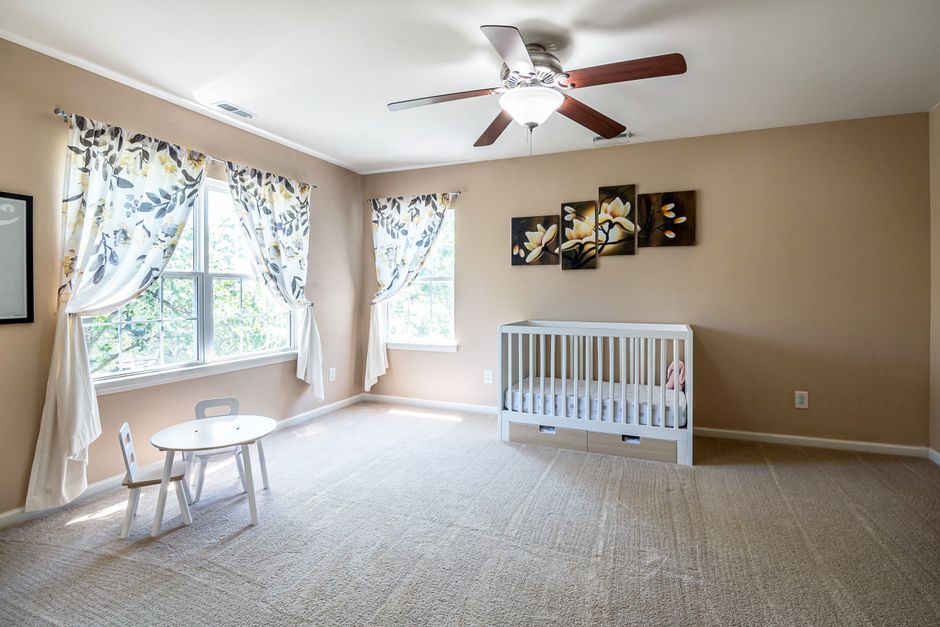
Blackout curtains only work if they completely cover your window and any gaps where light can seep through. Measure your windows accurately before ordering. The curtains should extend beyond the window frame on all sides—ideally, 4-6 inches on each side minimum. You’ll also want colors and patterns that match your nursery décor. Fortunately, modern blackout curtains come in virtually every color imaginable.
5. Durability and Washability
Nursery curtains need periodic cleaning. Look for machine-washable options that won’t fade or lose their blackout properties after washing. High-quality curtains maintain their integrity through multiple wash cycles. Check whether the fabric shrinks significantly, as this affects how they hang long-term.
Top Blackout Curtain Options ReviewedAmazon Basics 100% Blackout Curtains
The most popular choice for budget-conscious parents, Amazon Basics 100% Blackout Curtains deliver exceptional value. These curtains feature a triple-weave construction that genuinely blocks nearly all light. They come in multiple sizes and a decent range of colors. Most parents report that their babies sleep noticeably better within days of installation.
The grommet-top design makes installation straightforward with a standard curtain rod. Machine washability is convenient, and they maintain their blackout properties through many wash cycles. At under $20-30 per panel, they’re an accessible entry point even for parents on tight budgets.
| Pros | Cons |
|---|---|
| Truly 100% blackout performance | Color selection is basic |
| Affordable and accessible | Can feel slightly stiff/heavy |
| Easy to install | May have light creep at sides without additional blocking |
| Machine washable | Limited thermal insulation |
Nicetown Thermal Insulated Blackout Curtains
If you prioritize both blackout performance and temperature regulation, Nicetown curtains are excellent. These use a three-layer fabric construction with a thermal backing that genuinely helps insulate your nursery. Parents in extreme climates (very hot summers or cold winters) consistently praise the temperature control.
The blackout quality is outstanding, and they come in sophisticated color options that make the nursery look more design-forward than utilitarian. They’re heavier than basic blackout curtains, which some parents love for the solid feel and others find overkill. The price point is moderate—typically $25-40 per panel.
| Pros | Cons |
|---|---|
| Excellent thermal insulation | Heavy weight may require sturdy rods |
| Superior blackout quality | More expensive than basic options |
| Attractive color selection | Takes longer to dry after washing |
| Sound dampening benefit | Can feel stiff initially |
Blackout Curtain Liners (For Existing Curtains)
If you already have nursery curtains you love but they don’t block light adequately, blackout liners are a brilliant solution. These attach behind existing curtains using hooks, velcro, or special clips. They’re significantly cheaper than buying new curtains and let you maintain your chosen aesthetic.
The downside is they require coordinating two layers, which can look bulky if not installed carefully. They’re also harder to clean since you can’t always wash both layers together. However, for parents who’ve already invested in nursery décor, this is an efficient compromise.
Tension Rod Blackout Curtains (Cordless Solutions)
For maximum safety, cordless blackout curtains that mount on tension rods eliminate strangulation hazards entirely. These are becoming increasingly popular with safety-conscious parents. They mount securely without any dangling cords and work excellently for windows of various sizes.
The tradeoff is they’re more expensive (typically $30-50 per panel) and offer slightly less customization in terms of opening/closing styles. They work best as permanent installations rather than curtains you adjust frequently. For nurseries where you’re primarily closing them for sleep and leaving them closed, this is ideal.
Safety Considerations for Nursery Curtains⚠ Safety Note: According to the Consumer Product Safety Commission, window covering cords are a serious strangulation hazard for children. Never install traditional pull-cord curtains in a nursery where your child might eventually reach them. If using corded curtains, they must be installed high and securely, with cords tied up and out of reach at all times. Consider cordless options for maximum safety peace of mind.
Beyond cords, consider these safety factors:
- Secure Installation: Use appropriate hardware for your wall type. Falling curtain rods or panels pose impact and entrapment hazards. Use heavy-duty anchors if mounting to drywall.
- Non-Toxic Materials: Ensure curtains and any lining materials don’t off-gas harmful chemicals. Look for certifications like OEKO-TEX or Greenguard, which verify low chemical emissions.
- Flame Retardant Properties: Most quality blackout curtains meet flame ret🛒Our Top Amazon Picks Verified prices & availability
You Might Also Like
❤ Found this helpful? Help another parent:👶Sarah Bennett Mom of 3 · Certified Pediatric Sleep Consultant · 8 Years Reviewing Baby Gear Sarah has personally tested hundreds of baby products across three children. She holds a certification in pediatric sleep and focuses on real-world usability, safety ratings, and honest value assessments — not just what looks good in ads.